
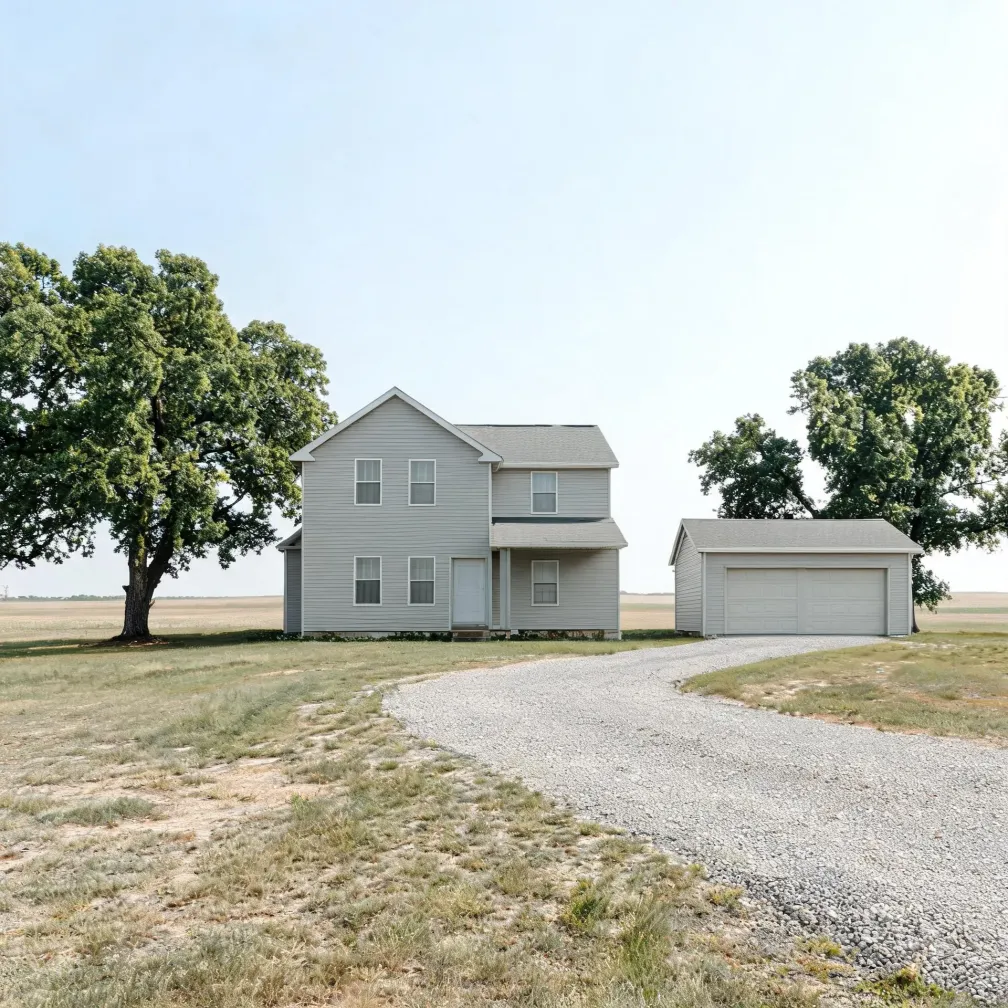
What Minnesota homes are up against.
NOAA National Centers for Environmental Information, Storm Events Database, bulk CSV export, events 2015-01-01 through 2024-12-31. · U.S. Census Bureau, 2020-2024 American Community Survey 5-Year Estimates

What a contractor has to work out before quoting is how much the equipment at a given address has been asked to hold up, not what the state as a whole has been through. 12,360 severe weather events were recorded in Minnesota between 2015 and 2024. That figure tells you the conditions equipment across Minnesota has been working inside, and it is a real load. But it is one number spread across a place large enough that two houses under the same total can have seen very different demands on their systems. A specification built from statewide conditions alone can miss what the equipment at one address has actually been asked to do, and the quote that follows can be off before the contractor sets foot on the property.
Before a contractor quotes a heat pump installation, they have to assess what is already in the house: whether the electrical service can carry the load, whether existing ductwork moves air the way a heat pump needs it to, and whether the distribution layout fits the new equipment at all. None of that can be read from the outside. Half the homes in Minnesota were built in 1979 or earlier (2020-2024 ACS 5-year). A house built before modern efficiency standards were established is likely to have systems that were sized and configured for a different kind of equipment, which means the contractor's first job is inspection, not specification. What they find in the walls and the utility room sets the scope of the work.
Does your county put extra wear on HVAC equipment in Minnesota?
2015–2024 · Source: NOAA National Centers for Environmental Information, Storm Events Database.
A county that logs a high volume of severe weather events is asking more from outdoor equipment than the raw installation specs assume. Condensers sit outside through hail, high winds, heavy snow loads, and temperature swings that compress years of wear into a single season. Getting the sizing, placement, and protection details right for that exposure is a job for a licensed contractor, and that is exactly who we match you with.
Minnesota HVAC Contractor License Requirements
Minnesota sets its own rules for who can perform HVAC installation and repair work, and the provisions below are quoted directly from state sources rather than paraphrased.
Minnesota defines a mechanical contractor as a business that installs, repairs or maintains heating, ventilating, cooling or refrigeration systems — the definition that carries the exemption from the residential contractor licence.
A state license requirement means the work is reserved for contractors who have met Minnesota's standards for this trade. Unlicensed individuals are not authorized to do it. Every contractor this site routes a request to holds the license these provisions describe, and passing that check is what happens before a request moves forward.
View the source provisions2 provisions
Minnesota defines a mechanical contractor as a business that installs, repairs or maintains heating, ventilating, cooling or refrigeration systems — the definition that carries the exemption from the residential contractor licence.
Minnesota's residential contractor licence does not reach HVAC work: the licensing section carries its own exemption list, and a mechanical contractor is exempt from the licence requirement by name.