
What Ohio homes are up against.
NOAA National Centers for Environmental Information, Storm Events Database, bulk CSV export, events 2015-01-01 through 2024-12-31. · U.S. Census Bureau, 2020-2024 American Community Survey 5-Year Estimates

What a contractor needs to know before quoting is not settled by a number that covers the whole state. 9,641 severe weather events were recorded in Ohio between 2015 and 2024. A rate like that means equipment somewhere in Ohio is being pushed hard on a regular basis, but the statewide total cannot tell a contractor which loads apply to a particular house, on a particular lot, with whatever insulation and ductwork it has. A specification drawn from state-level data alone skips the site conditions that determine whether a system keeps up or falls short. That is the assessment a contractor has to make before any equipment gets sized.
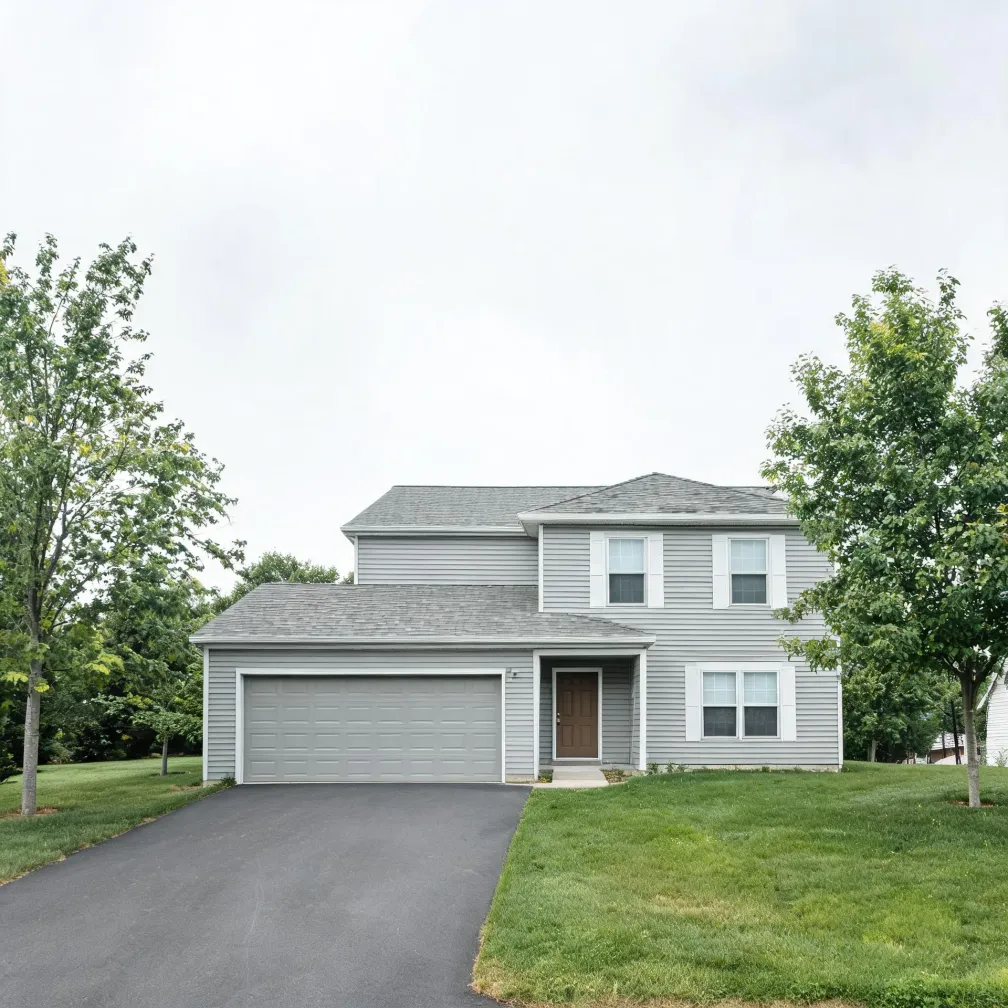
A quote for heat pump work starts with what is already in the house, and in Ohio that means the contractor has to verify rather than assume. Half the homes in Ohio were built in 1970 or earlier (2020-2024 ACS 5-year). Ductwork sized for a furnace and electrical panels wired for an older load profile are common finds, and either one can change what the install actually requires. A contractor will check airflow, measure the service capacity, and determine what carries over before specifying anything. What gets uncovered in that assessment shapes the scope as much as the equipment itself does.
Does your county put extra wear on HVAC equipment?
2015–2024 · Source: NOAA National Centers for Environmental Information, Storm Events Database.
A condenser sitting outside in Ohio faces hail, ice loading, high winds, and summer heat that can push a system hard in both directions. Where your county lands in this ranking shapes what capacity makes sense, how a unit should be positioned and protected, and how often the refrigerant circuit and electrical components need attention. The contractor you are matched with knows the conditions your address sees and sizes and installs accordingly.
Ohio HVAC Installation and Repair License Requirements
Ohio sets its own rules for who can perform HVAC installation and repair work, and the provisions below are drawn directly from state sources rather than paraphrased.
An Ohio home construction services contract must include a copy of the supplier's certificate of insurance showing general liability coverage of not less than two hundred fifty thousand dollars.
A state licensing requirement means the work is reserved for contractors who have met Ohio's standards for this trade. Unlicensed individuals are not permitted to perform it legally. Every contractor this site routes a request to holds the license these provisions describe, and that is the condition a request passes through before it reaches anyone.
Read the source provisions14 provisions
An Ohio home construction services contract must include a copy of the supplier's certificate of insurance showing general liability coverage of not less than two hundred fifty thousand dollars.
In Ohio a home construction service means the construction of a residential building, including the repair, improvement, remodel or renovation of an existing structure, and does not include construction on a structure containing four or more dwelling units except for work on an individual dwelling unit within it.
A home construction service supplier in Ohio is defined as a person who contracts with an owner to provide home construction services for compensation and who maintains a general liability insurance policy of not less than two hundred fifty thousand dollars.
The Ohio construction industry licensing board issues state licenses to individuals as heating, ventilating and air conditioning contractors, refrigeration contractors, electrical contractors, plumbing contractors and hydronics contractors.
An Ohio board of county commissioners may accept a valid and unexpired Chapter 4740 license held by a heating, ventilating and air conditioning contractor toward its own licensing requirements for work on one-, two-, or three-family dwelling houses.
An Ohio board of county commissioners may adopt rules licensing heating, ventilating and air conditioning contractors who are not required to hold a state license under Chapter 4740.
In Ohio municipal law a specialty contractor includes heating, ventilating and air conditioning contractors, refrigeration contractors, electrical contractors, plumbing contractors and hydronics contractors.
An Ohio board of county commissioners may not register a specialty contractor who is required to hold a license under Chapter 4740 but does not hold a valid one.
An Ohio municipal corporation may not register a specialty contractor who is required to hold a license under Chapter 4740 but does not hold a valid one.
In Ohio building law a residential building means a one-family, two-family or three-family dwelling house and any accessory structure incidental to it, and does not include an industrialized unit, a manufactured home or a mobile home.
Ohio's contractor licensing chapter reaches only work on a construction project, and a construction project is defined to exclude residential buildings, so an HVAC contractor working on a one-, two-, or three-family dwelling in Ohio falls outside the state licensing requirement.
Violating Ohio's contractor licensing prohibition is a minor misdemeanor on a first violation and a misdemeanor of the fourth degree on subsequent violations.
Under Ohio law no person may act as or claim to be a type of contractor that Chapter 4740 licenses unless that person holds a license issued under that chapter.
In Ohio a home construction service supplier may not perform a home construction service costing twenty-five thousand dollars or more without entering into a written home construction services contract with the owner, unless the supplier and owner enter into a cost-plus contract.